Interactive application
Interactive
Overview · selected highlights

Inverse Render Lab

Reconstruct a shape, separate appearance from illumination, or recover a hidden target from indirect measurements. Each inverse problem exposes its forward model, fitting variables and residuals, making it possible to distinguish a convincing image from an identifiable physical explanation.

Image error becomes a parameter update
RenderCompareRecover
Brochure →Open project ↗
  1. ◉

    Design the capture

    Choose calibrated images, depth, illumination codes or transient measurements.

  2. θ

    Choose the unknowns

    Specify geometry, material, light or hidden-scene parameters.

  3. ∇

    Fit the model

    Compare derivative and optimization routes on the measured evidence.

  4. Δ

    Challenge the result

    Inspect residuals, alternative explanations and information the capture cannot recover.

Better measurements can matter more than a better optimizer.
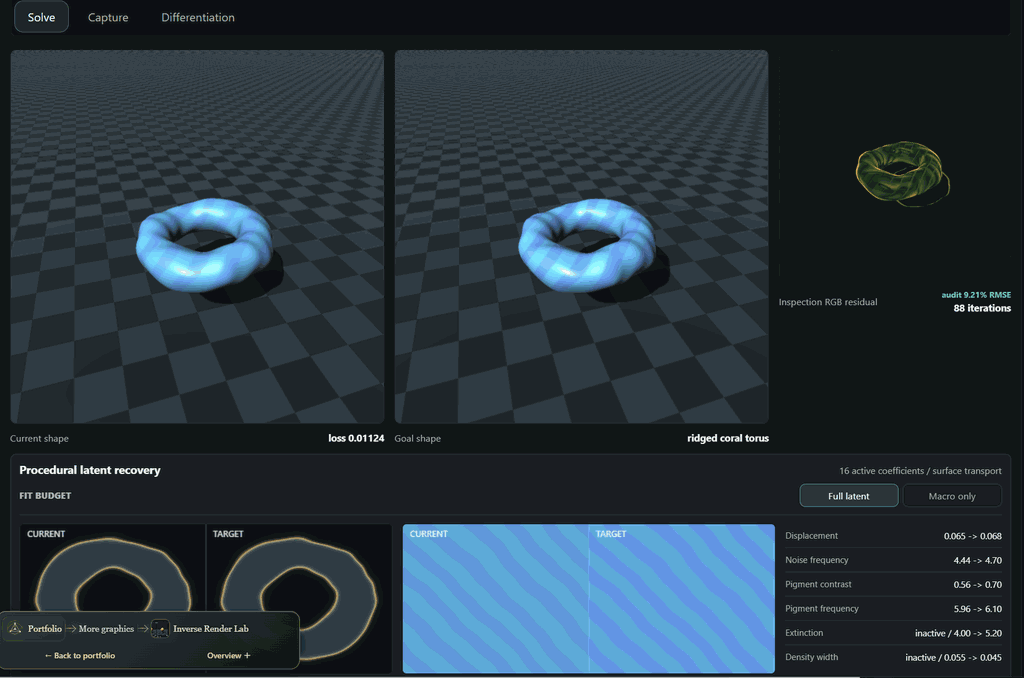
Procedural torus recovery with current and goal renders, image residual and latent-parameter comparisons.
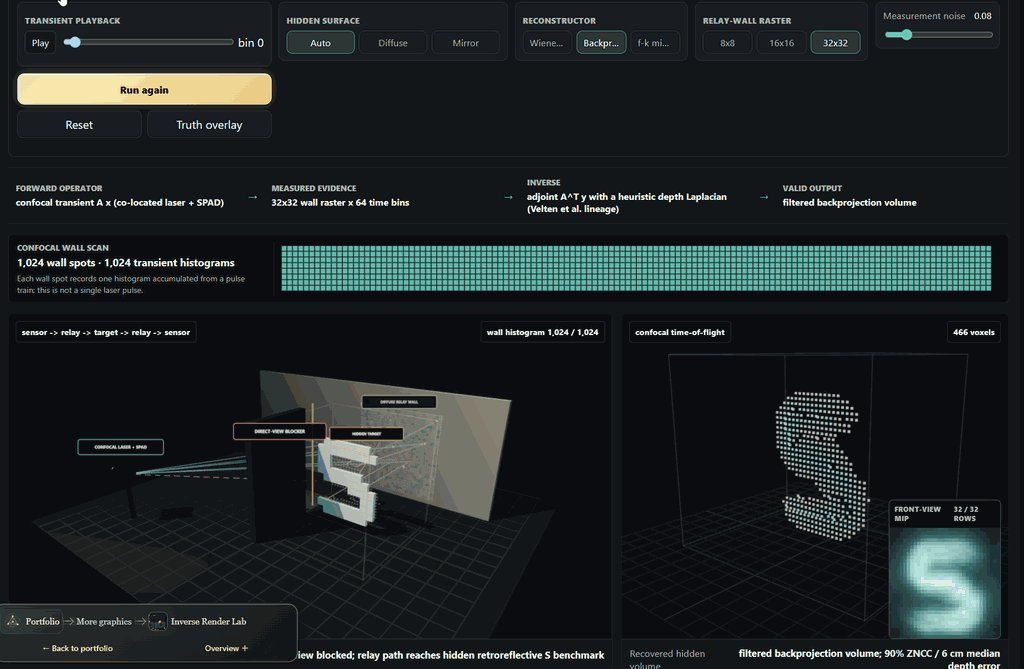
A 32-by-32 relay-wall scan and its filtered-backprojection volume, with the recovered front view.
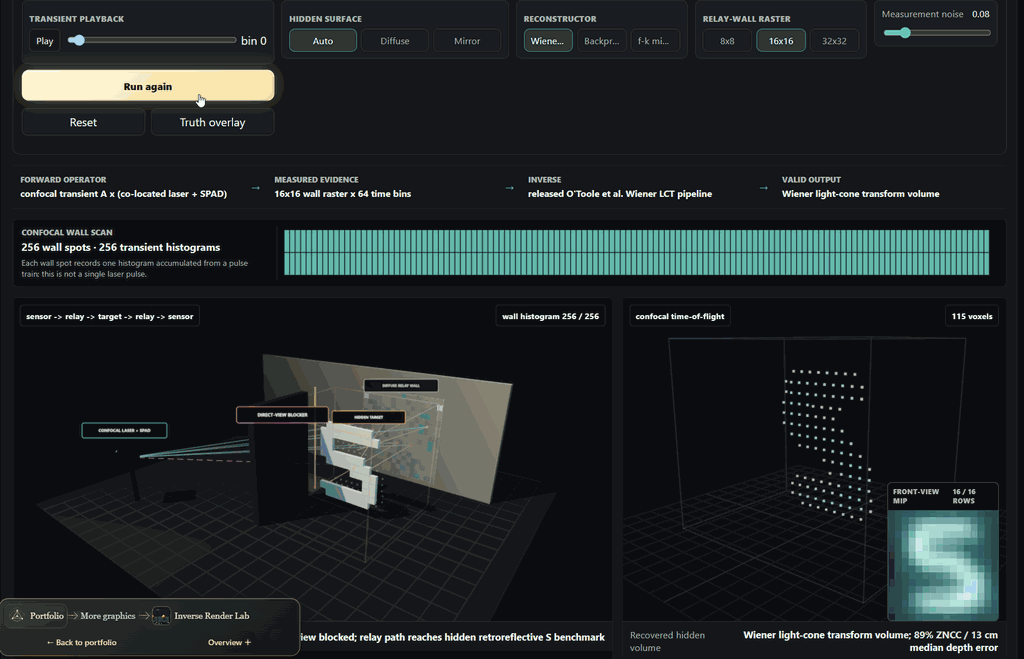
Confocal wall-scan histograms, relay-wall geometry and the Wiener light-cone-transform reconstruction.
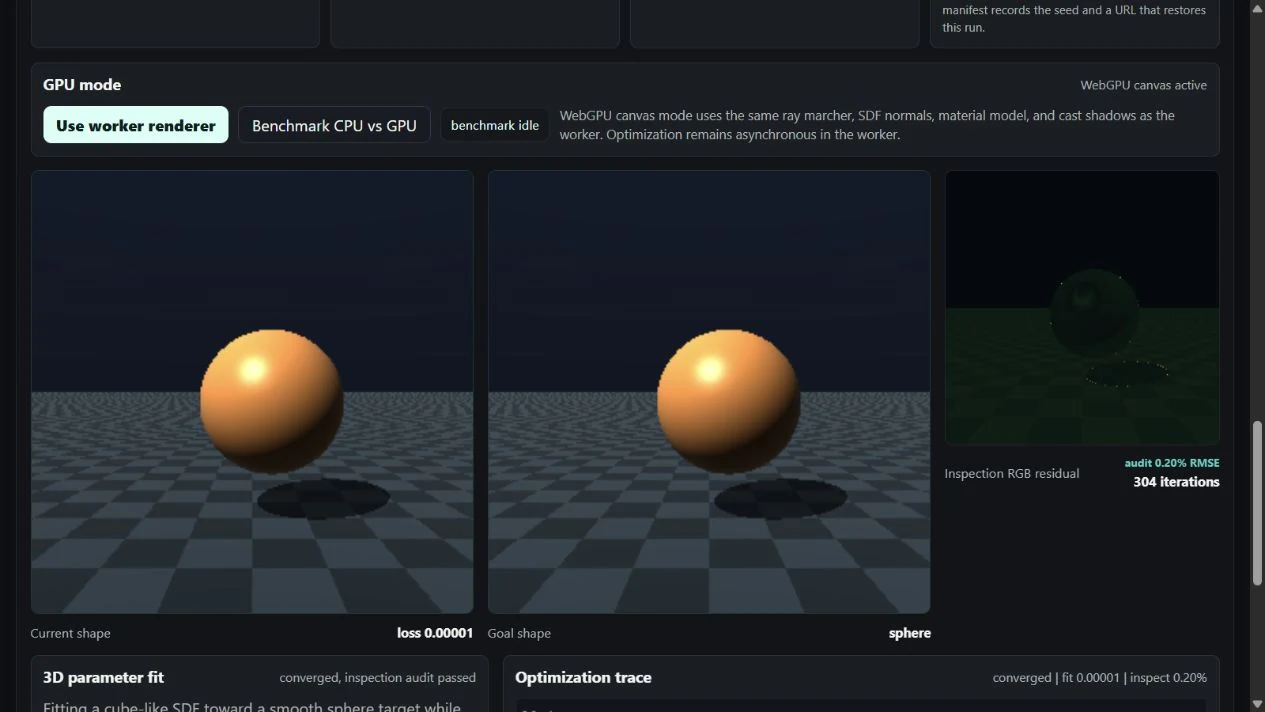
A fitted surface, target image, and inspection residual in the 3D reconstruction lab.