Interactive application
Interactive
Overview · selected highlights

Drawing with harmonics

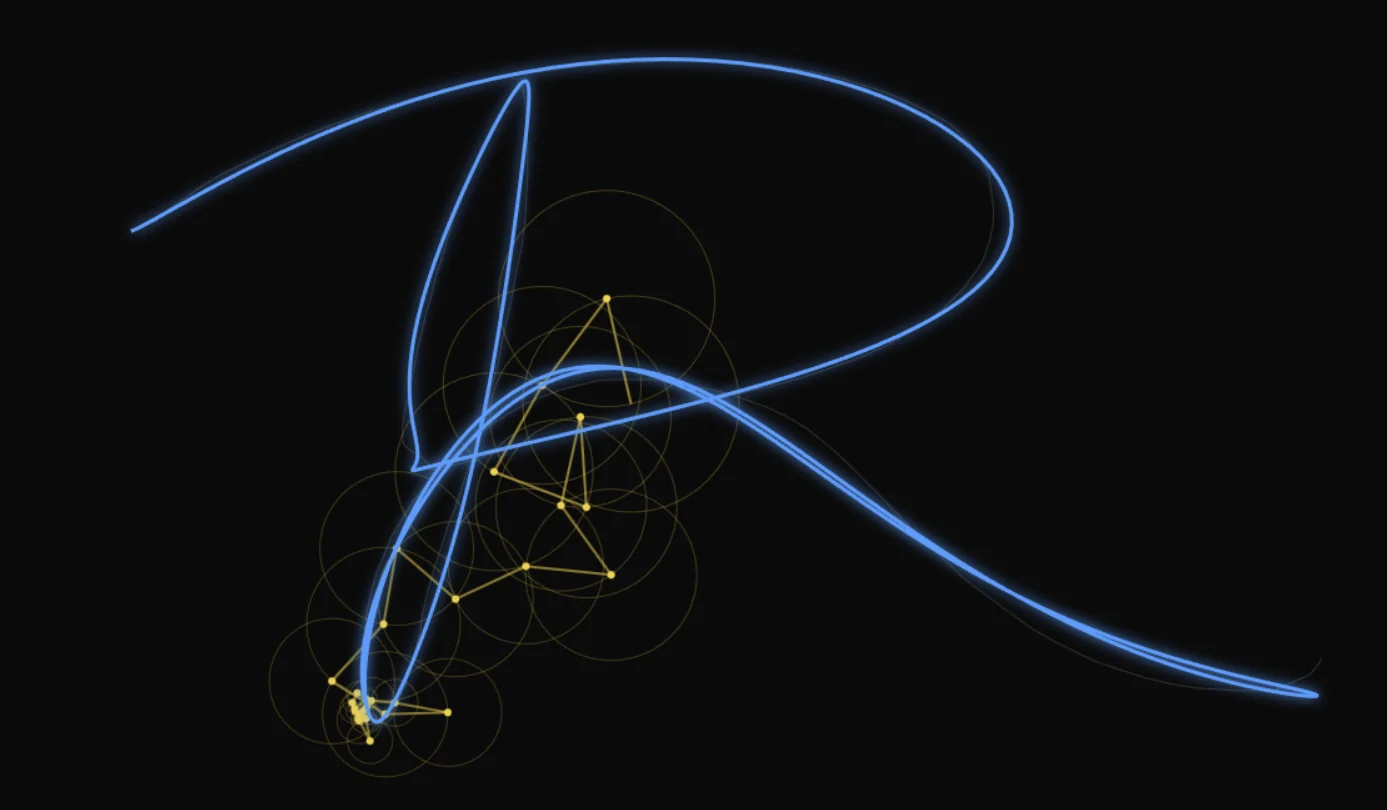
A drawing is a timed performance, not only an outline. Keep a gesture's changing speed and inspect its moving STFT spectrum, then compare global Fourier selection, cosine symmetry, pinned-end sine modes and local wavelet detail through their reconstructions.

A drawn gesture becomes oscillating components
TraceDecomposeRebuild
Brochure →Open project ↗
  1. t

    Capture the gesture

    Draw a path while retaining when and how quickly it was drawn.

  2. ω

    Choose a decomposition

    Compare local windows, global harmonics and alternative boundary conventions.

  3. ▥

    Inspect the coefficients

    Reveal moving spectral energy or the local detail being retained.

  4. ↺

    Reconstruct the motion

    Watch the selected components recover the path and its timing.

STFT makes the local tradeoff between time and frequency visible in a gesture you created.
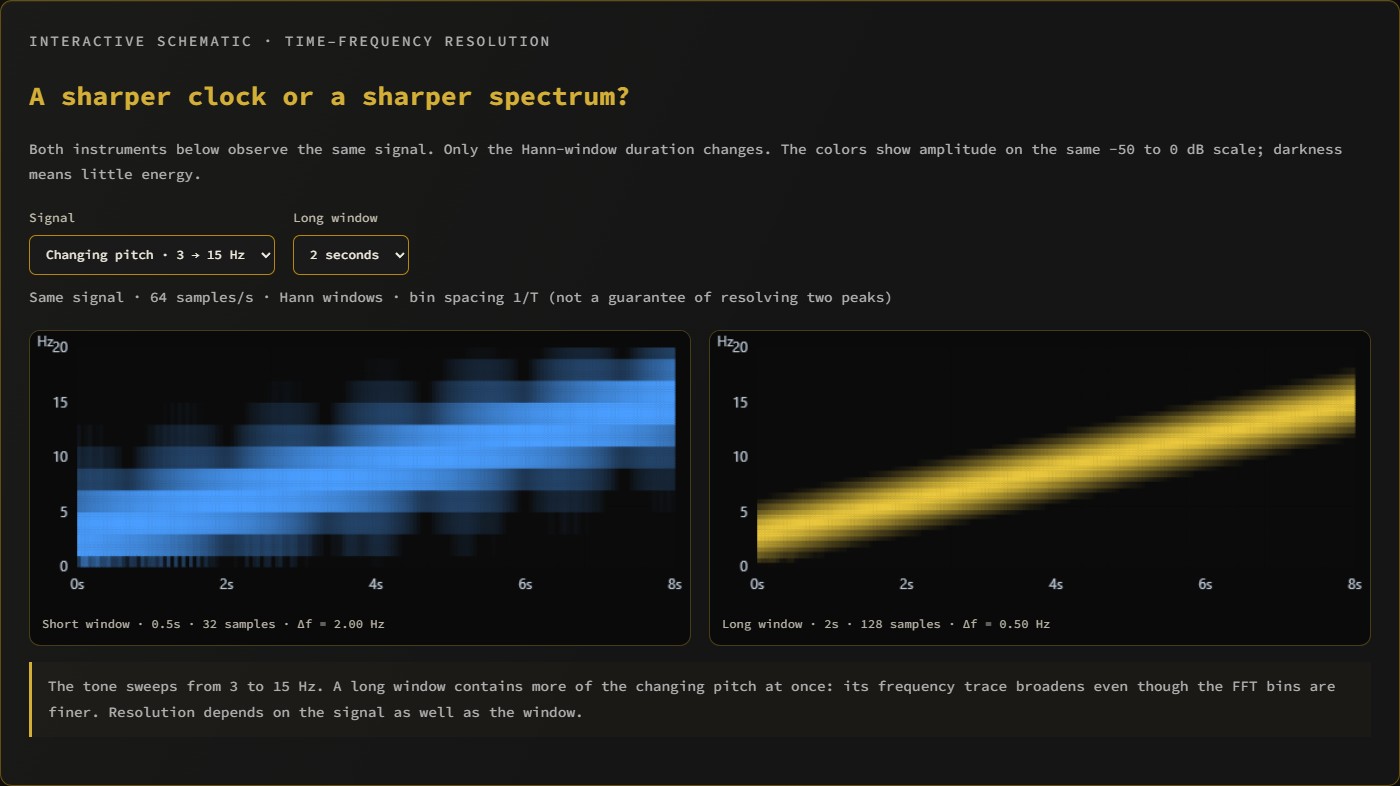
The same 3–15 Hz chirp through 0.5-second and 2-second Hann windows, on a common amplitude scale. The longer window has finer frequency-bin spacing but spans more changing pitch.
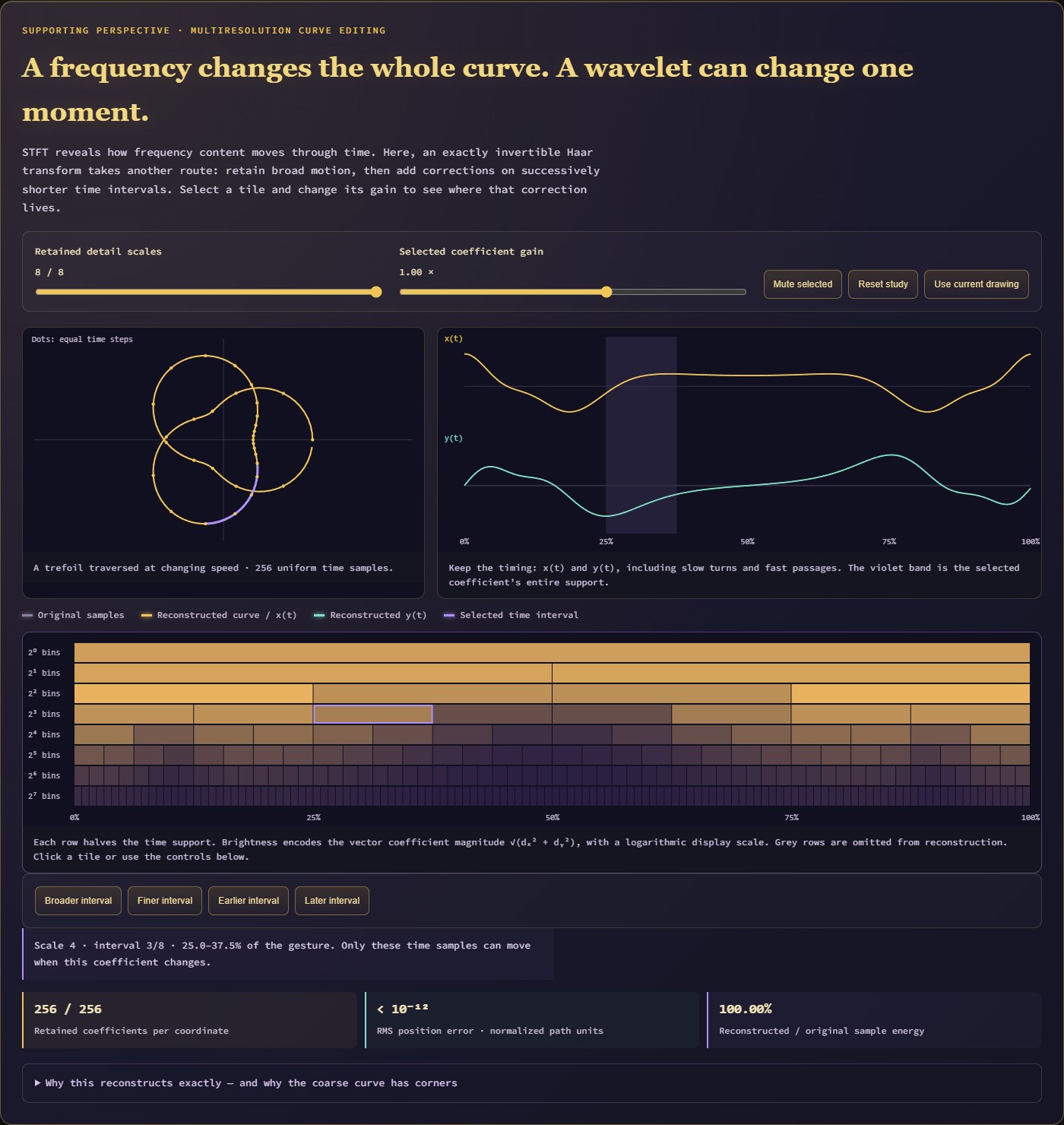
Haar reconstruction of a timed trefoil with all eight detail scales retained. The coefficient map and highlighted time interval expose where a local edit acts; x(t) and y(t) retain the traversal timing.
Cosine-transform study in the earlier interface; retained as a historical view.